Engineering
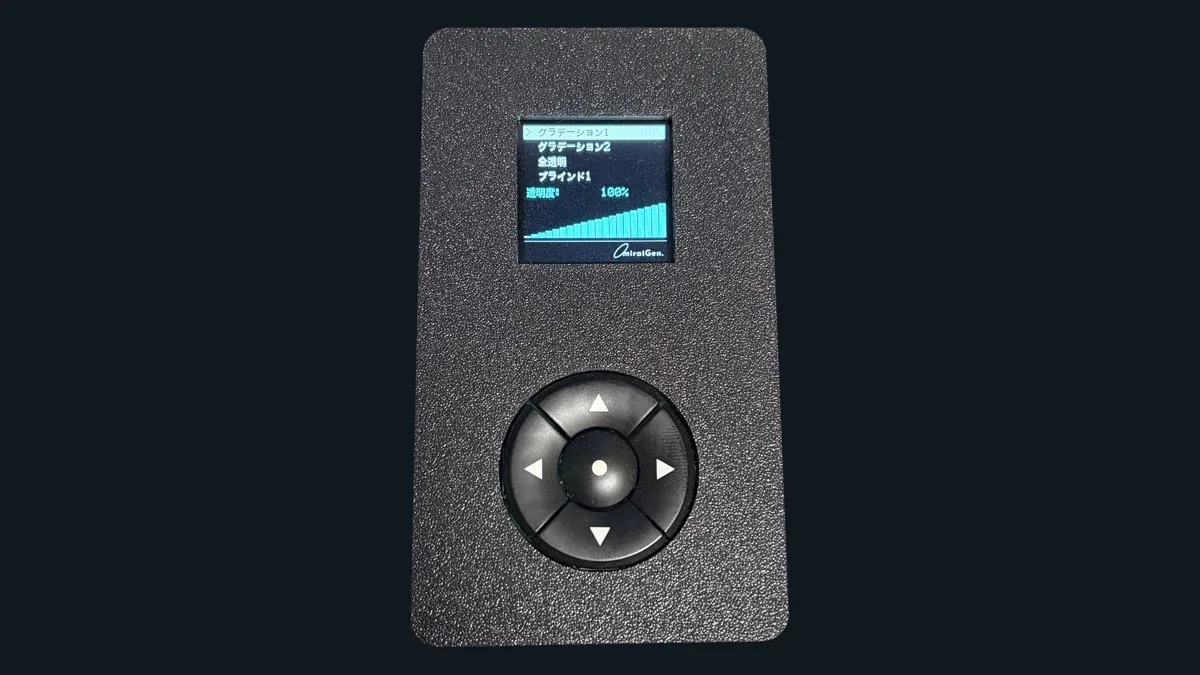
The Multi-Zone Smart Glass System was made possible by the technologies we have built up over the years. Electronic circuits, embedded software, high-voltage control, communications — we apply them together to turn ideas into products. This page presents the technologies we have actually developed and examples of them in use. We also pursue products that do not yet exist and ideas that are within reach, and some materials and components are available for experimental and research use.
Capabilities
Not a list of what we could do, but the technologies we have built into real products, organised by field.
AI
From circuit and board design studies to firmware and app implementation, documents and the text of this website, our engineers work in dialogue with AI (such as Claude). By keeping design records, reasons for decisions and verification results as documents shared with the AI, work efficiency has improved dramatically.
The controller of the Multi-Zone Smart Glass System (board, firmware and app) and the revision of this website were both produced this way. The know-how of how to divide work with AI and how to verify its output is itself becoming one of our assets.
A place for people and AI to talk, per project and per department
Board development, firmware, patent filing, general affairs, promotion — each project or department has its own record store and its own space for dialogue with AI. Design history, the reasons behind decisions, verification results and records of failures accumulate there as documents, and the AI answers the next task with that context in hand. Even when the person in charge changes or time passes, the AI keeps that department's memory and work continues.
Merging knowledge across departments
The spaces are separate, but the knowledge flows across them. Know-how accumulated in the course of board and firmware development, for example, is handed seamlessly to the intellectual-property side and becomes the raw material for patent applications; in return, the way a technology is positioned in a filing feeds back into development decisions. People and AI move between development, IP, general affairs and promotion through the same documents — and this mechanism itself makes it possible to cover the breadth of work of a much larger organisation with a minimal team.
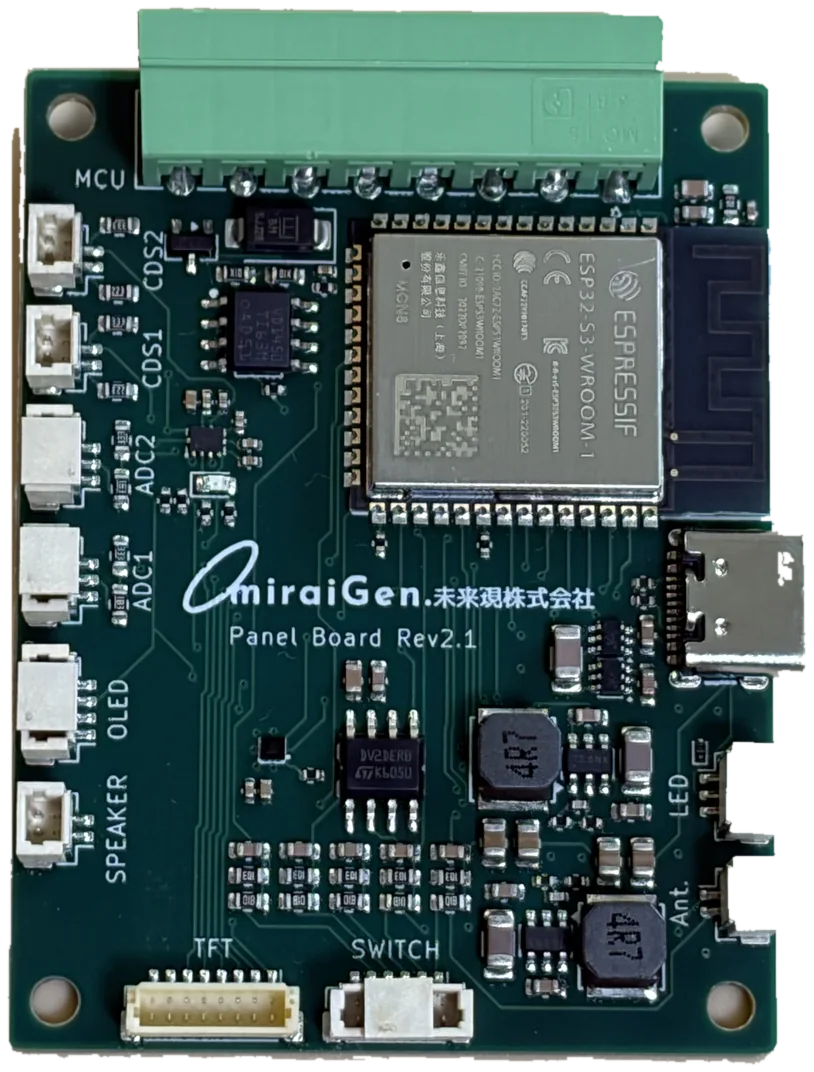
Edge AI
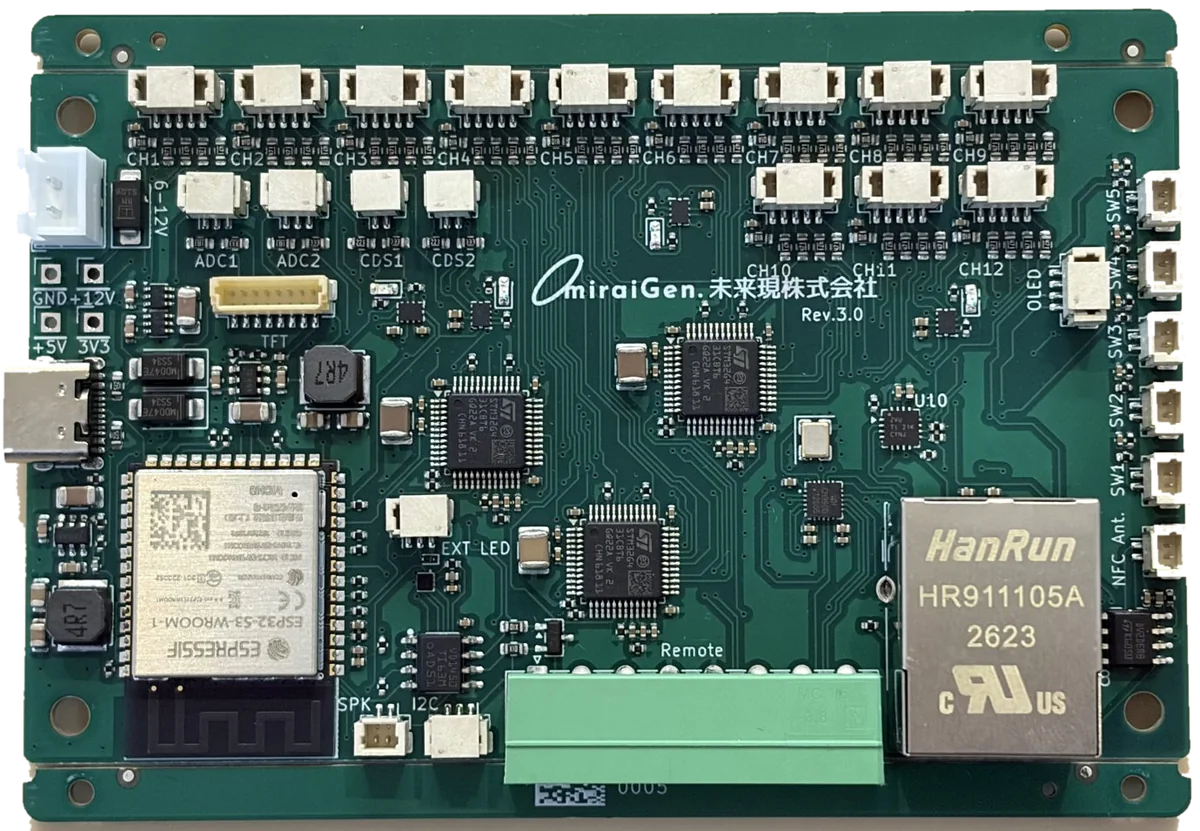
A compact board of our own design, used as the wall switch of the Multi-Zone Smart Glass System. Built around the ESP32-S3, it has RS-485 communication, ADC inputs for sensors, general-purpose GPIO (to drive external relays etc.), an I2C expansion port, NFC, audio output, camera input and a small-display output — every interface an end node needs, on a board of just 45 × 55 mm (about half a business card).
The next step for edge AI
Instead of running an inference model on the board, the microcontroller acts as a client of an AI API. It senses through sensors, thinks through the AI, acts through GPIO and relays, and links with a smartphone over NFC. A tiny MCU board borrows the intelligence of a cloud-side AI to make decisions, while fast control and fail-safe behaviour stay local.
Examples: in a solar power system, optimizing electricity costs by letting the AI decide charge/discharge timing from sunlight, time of day and 30-minute market prices; automating agriculture (irrigation, fertilizing, lighting) with various sensors. Illuminance-linked automatic dimming in the Multi-Zone Smart Glass System is on the same path. This is currently at the concept and verification stage.


Energy
Efficient generation combined with battery storage
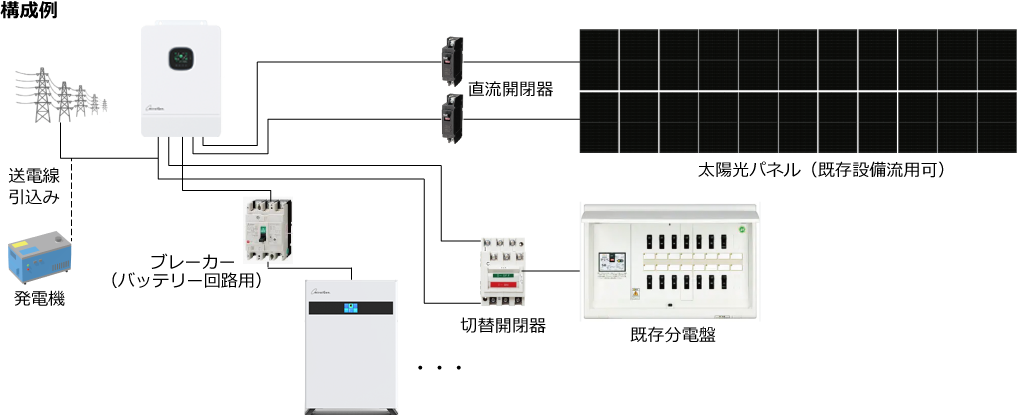
Surplus solar energy is stored in batteries for later use. By deciding how the solar panels and the battery are controlled to match how electricity is actually used through the seasons and the hours of the day, we design generation systems whose cost-effectiveness is optimised.
Working with AI
We are also looking at letting AI analyse, in real time, electricity-market conditions such as 30-minute market prices together with sensor outputs such as outdoor illuminance, and decide when to charge and discharge so as to optimise electricity costs.

Magnet
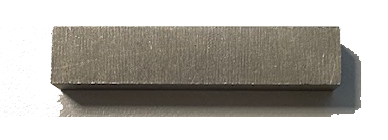
Unlike standard magnets with both North and South poles, quasi-monopole magnets are structured with identical poles at both ends. A magnet with North poles at both ends will have a weak South pole in the center, and vice versa.
Manufacturing method
We use specially designed magnetizing coils to create these magnetic structures. Various winding techniques, wire gauges, and coil counts are tested in pursuit of stronger magnetic properties. The magnetizing equipment itself is also developed in-house.

For research & experimental use

For research & experimental use
Ask us about contract or joint development, materials and components through the inquiry form.
Contact us